




Aagya Khabar
Janakpurdham
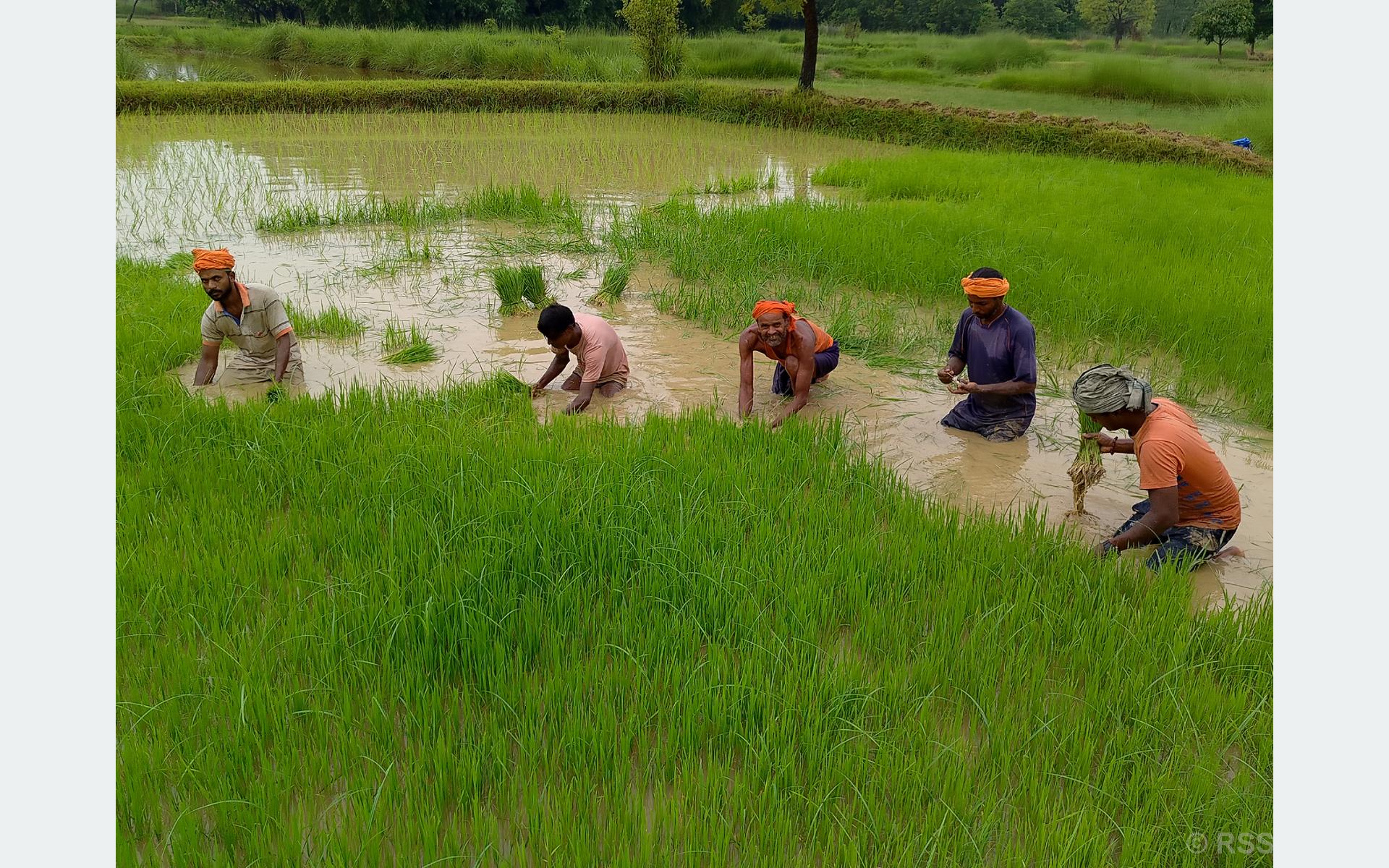
This year, paddy transplantation in Madhesh Province has been affected as the monsoon became active late. According to the Agriculture Development Directorate, by the end of the month of Asar, paddy transplantation had been completed on only about 58 percent of the total cultivable paddy area across the province.
According to the Directorate, among the eight districts of the province, Siraha has recorded the highest paddy transplantation with 80 percent of its cultivable area completed, while Mahottari is the farthest behind. Data show that only 39.59 percent of the cultivable area in Mahottari has been transplanted so far.
Kiran Bishwakarma, Horticulture Development Officer at the Agriculture Development Directorate, said that irregular rainfall forced most farmers to wait for sufficient water. According to him, transplantation has picked up pace in recent days following increased rainfall, and the remaining areas are expected to be completed soon.
According to provincial data, paddy transplantation has been completed on 34,000 hectares out of 68,000 hectares in Saptari, 43,200 hectares out of 54,000 hectares in Siraha, 21,850 hectares out of 43,700 hectares in Dhanusha, 15,838 hectares out of 40,000 hectares in Mahottari, 25,619 hectares out of 42,695 hectares in Sarlahi, 21,175 hectares out of 38,500 hectares in Rautahat, 24,805 hectares out of 45,100 hectares in Bara, and about 35,000 hectares out of 53,938 hectares in Parsa.
According to agricultural experts, if adequate rainfall occurs on time, paddy transplantation in the remaining areas will also be completed soon. They say that although transplantation has been delayed, production will not be significantly affected if the work can be completed within the month of Shrawan.
This year, many farmers have used improved varieties of paddy seeds. Agricultural technicians also say that, along with chemical fertilizers, the use of organic manure has increased. This is expected to help increase production while maintaining soil fertility.
However, in some local levels, the easy availability of fertilizers, irrigation facilities, and untimely rainfall continue to be major challenges for farmers. Farmers have demanded that the government pay greater attention to ensuring the regular supply of essential agricultural inputs and expanding irrigation infrastructure.